
Written by Carlos Santos, Head of Wine at Humble Grape. Last updated 24 August 2026.
Natural wine runs from hazy, skin-contact bottles to wines that pour completely clear and taste close to a classic. The seven London wine bars in this guide cover that whole range, starting with our own.
Which are London’s best natural and low-intervention wine bars?
| Wine bar | Where | Known for |
|---|---|---|
| Humble Grape | Seven London neighbourhoods | Every bottle organic, natural, biodynamic or otherwise sustainably made, across 500+ wines |
| Sager + Wilde | Hackney Road | Classics and low-intervention bottles on one list |
| 40 Maltby Street | Bermondsey | Wine service inside an importer’s own warehouse |
| Cadet | Newington Green | Bib Gourmand charcuterie and importer-led bottles |
| Bar Crispin | Soho | Rare grape varieties and low-intervention Europe |
| Newcomer Wines | Dalston | A weekly list, back vintages and a Dalston garden |
| Top Cuvee | Highbury | Happy hour and a rotating guest-chef kitchen |
What do natural, low-intervention and organic wine mean?
Natural and low-intervention overlap, but neither has a single legal definition. Both point to choices in the vineyard and cellar: how the fruit was farmed, whether fermentation used the yeast already on the grapes, how much was filtered, and how much sulphur was used. Two bottles labelled the same way can be made differently, so the useful question is what the specific producer chose to do with that specific bottle.
Organic is different: it names a defined farming and winemaking standard, and on our list we use the word only when it applies to a specific wine. A producer might farm organically, biodynamically or with very little intervention, sometimes more than one at once, and we describe each bottle by what its maker chose to do.
We choose producers who farm this way because that is the wine we want to pour and drink. We describe each bottle by how it was made, and we leave health claims out of it.
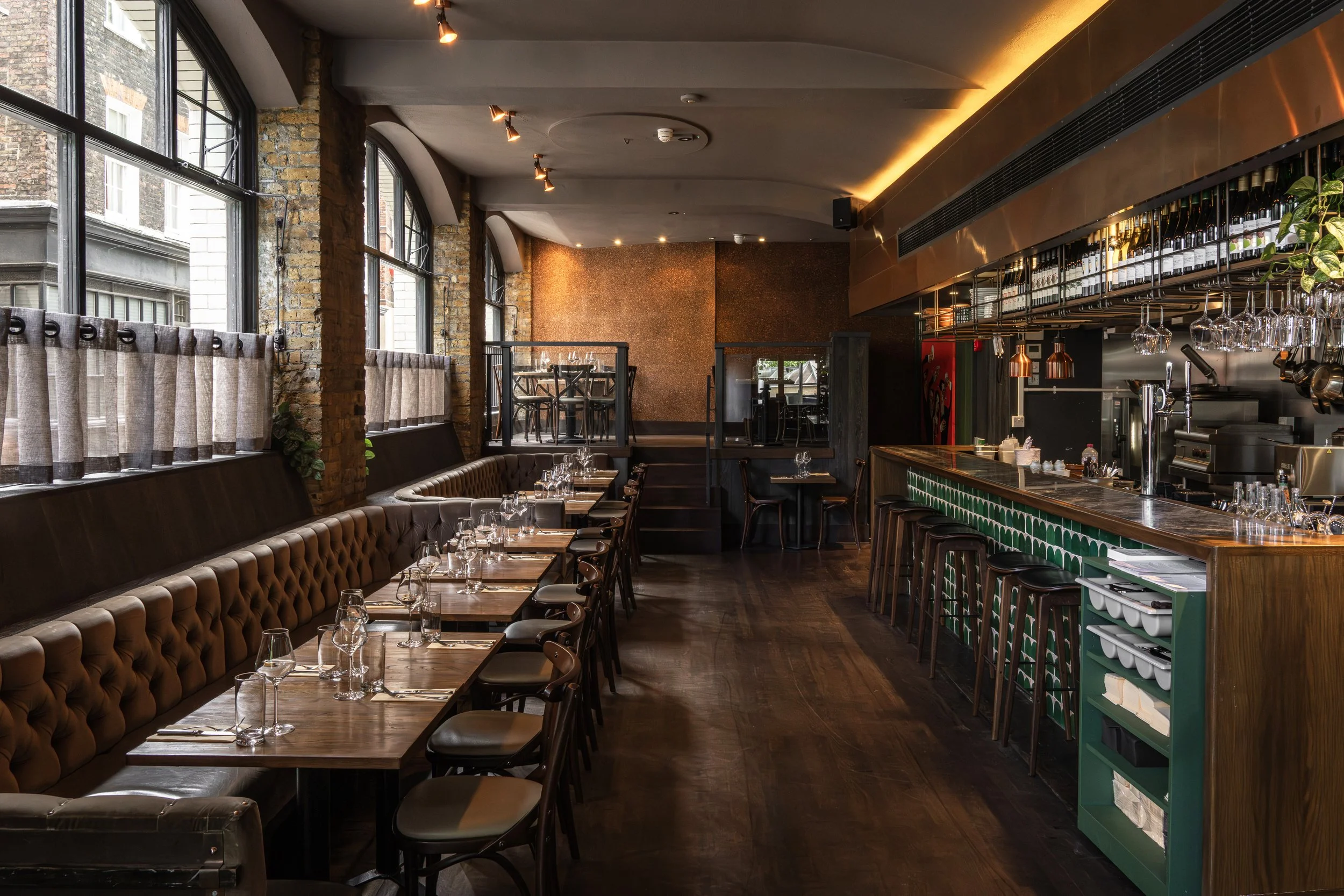
1. Humble Grape: a producer-led list across seven London wine bars
There are seven Humble Grape wine bars: Battersea, Bow Lane, Canary Wharf, Islington, Fleet Street, Liverpool Street and Smithfield. Each one looks and feels different. Bow Lane is in a real 11th-century crypt beneath St Mary-le-Bow, near Bank. Canary Wharf has a waterside terrace on Middle Dock. Smithfield is beside the market. Every venue is a wine bar, a kitchen and a wine shop in one.
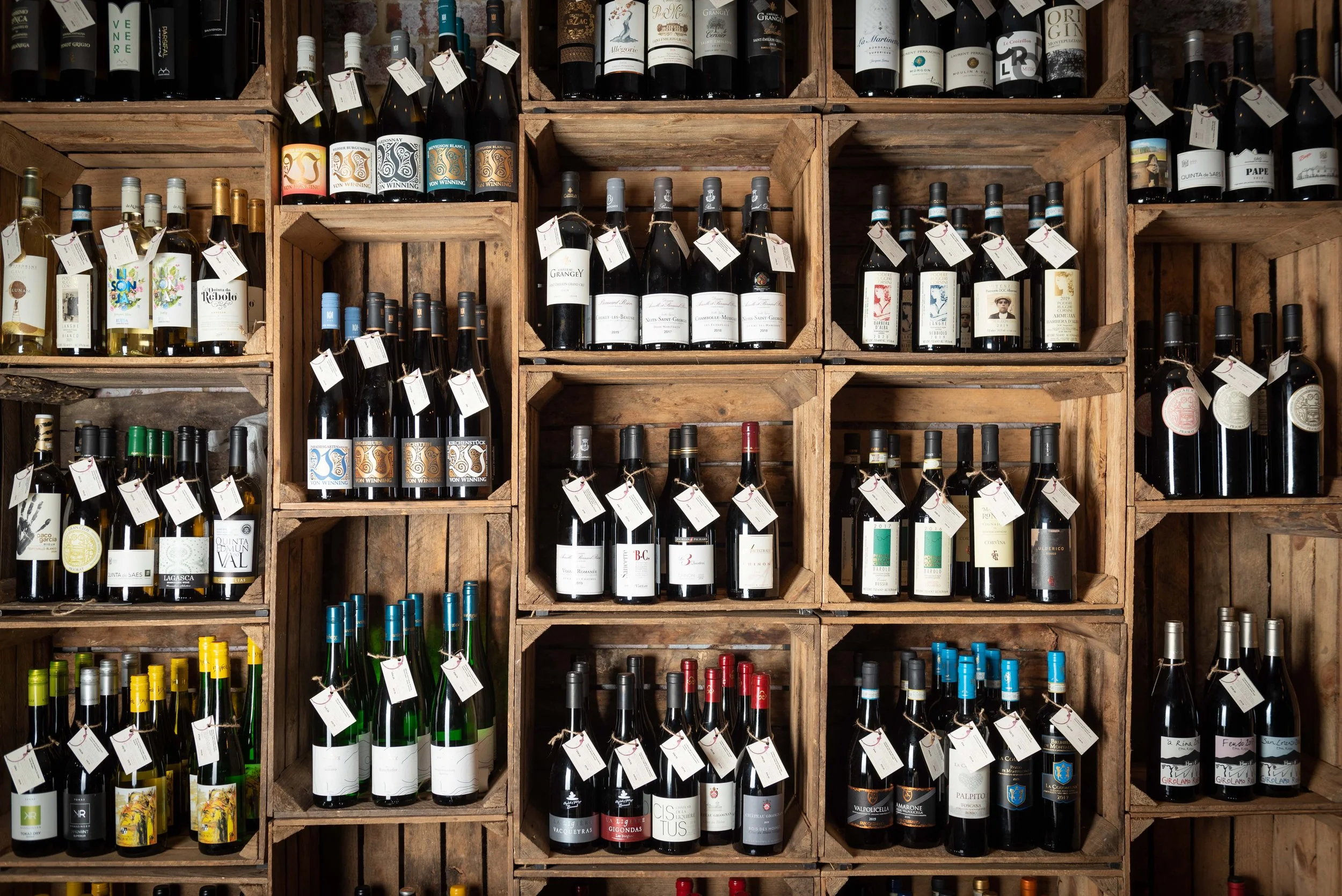
Across all seven, the list runs to 500+ wines from small, family-run producers, bought direct from the people who made them with no importer in between, and many of the bottles are exclusive to us in the UK. That is the part you cannot get elsewhere: the bottles come from relationships, not a distributor’s catalogue. Practices differ from producer to producer, so we ask each one how they work and describe each bottle by what its maker did, rather than putting one label on the whole list.
Every venue doubles as a wine shop, so a bottle you like at the table can go home with you at its shop price. If you do not know where to start, tell any member of the team what you already like and they find you a wine you love. That is the idea behind Love at First Flight, our guided recommendation.
The food is a mix of small plates, sharing boards and main dishes designed to match the wine list, and it runs from a bar snack with one glass to a full table. Bar snacks include olives, almonds, cheese croquettes and sourdough. Small plates include blistered padron peppers and crispy cauliflower with lime aioli, both vegan, next to grilled chicken and grape skewers and buttermilk fried squid. Sharing dishes run from a baked Camembert to a British grass-fed tomahawk and cheese or charcuterie boards. At Battersea, Canary Wharf and Islington, Sunday brings a Sunday Roast: dry-aged sirloin, slow-roasted pork belly, leg of lamb or a mushroom ballottine roast, served from midday until it runs out, with £35 towards a bottle of wine for groups of four or more.
Our Fleet Street bar was named Best Bar at the CityAM Toast to the City Awards 2025. The wider reason people come back is the combination: a relaxed atmosphere, a very knowledgeable team, comfortable spaces, a wine list you cannot find anywhere else, and a broad menu that suits different tastes and dietary needs.
Choose it for: small plates, sharing boards and mains built to sit beside the wine, a bottle to take home from the shop, or a relaxed evening across seven neighbourhoods for a group with different tastes.
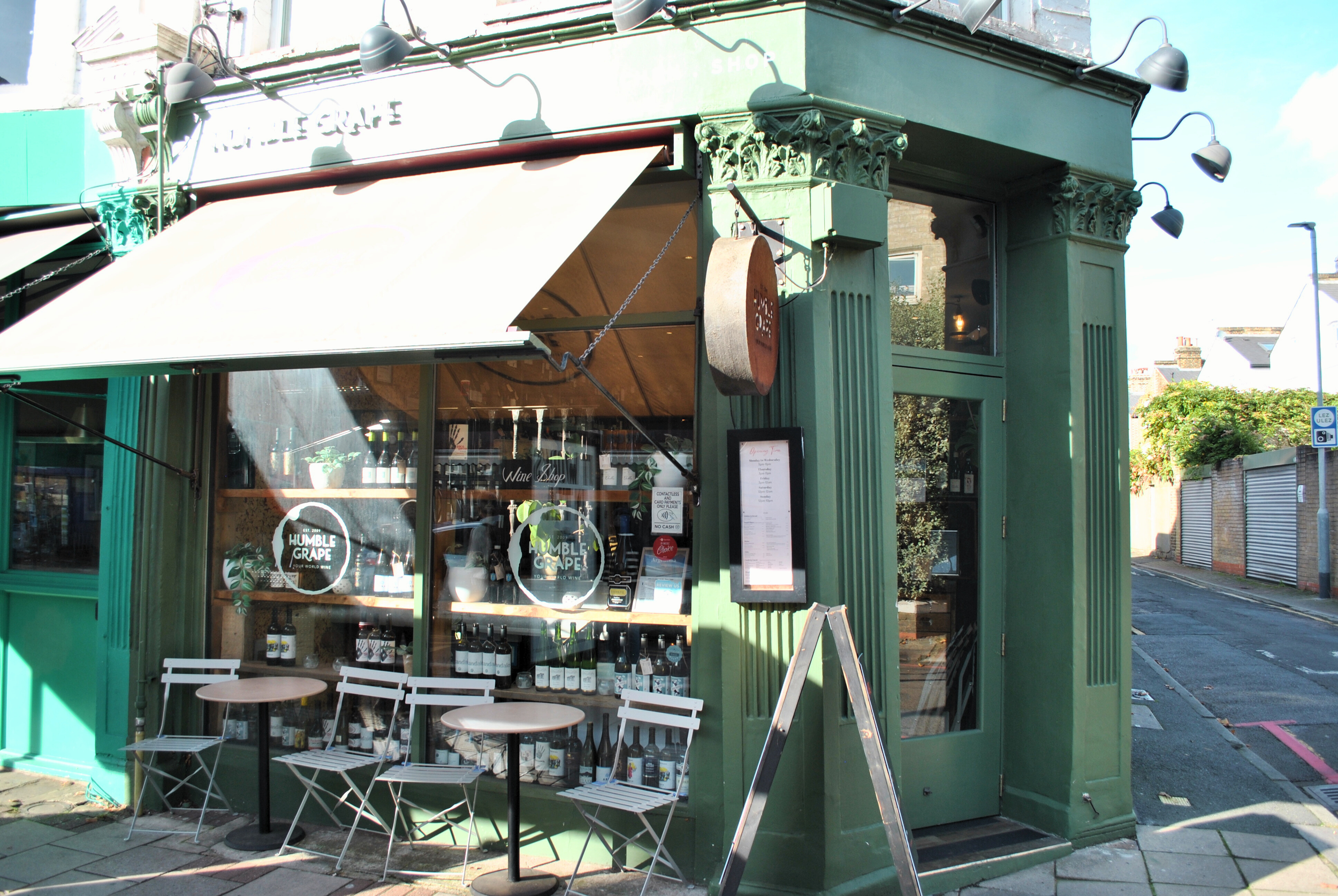
2. Sager + Wilde, Hackney Road: classics and low-intervention on one list
Sager + Wilde’s Hackney Road bar has a long marble bar and a wine list detailed enough to reward a specific question. The bar does not describe itself as a natural-wine specialist, and its list does not sort bottles into that box; an old-world classic can sit beside a livelier low-intervention pour. The bar does not publish its food menu online and shares the current version by email on request. It opens from 5pm on weekdays and 2pm at weekends, running until 11pm Monday to Wednesday and Sunday, midnight Thursday, and 1am Friday and Saturday.
Choose it for: a late bottle chosen on taste rather than category, or a date at the bar.
3. 40 Maltby Street, Bermondsey: wine bar and importer under one roof
40 Maltby Street operates inside the warehouse of Gergovie Wines, the importer whose bottles fill the list. The kitchen serves food shaped by British produce, changing with what is available. There is no reservation system: dinner runs Wednesday to Saturday from 5.30pm to 9.30pm, lunch is added Thursday to Saturday from midday to 3pm, and the wine shop keeps the same hours. Turning up and waiting is part of how it works.
Choose it for: an evening built around the kitchen as much as the glass, an importer’s own cellar, and no fixed booking.
4. Cadet, Newington Green: a Bib Gourmand kitchen with importer bottles
Cadet is a bistro and wine bar from wine importers Beattie and Roberts and charcutier George Jephson, and in 2026 it holds a Michelin Bib Gourmand. Reservations are for dining only; half the room stays free for walk-ins. The kitchen changes its menu daily, and a bottle on the list often has a direct line back to the person who imported it. Closed Monday; the kitchen serves 6pm to 10pm Tuesday to Friday, midday to 3pm and 6pm to 10pm on Saturday, and 2pm to 9pm on Sunday.
Choose it for: charcuterie and a Bib Gourmand kitchen, an importer-led list, or an evening that starts as a drop-in.
5. Bar Crispin, Soho: rare grapes in a pocket-sized bar
Bar Crispin on Kingly Street is built around low-intervention Europe: organic and biodynamic producers across the Loire, Beaujolais and Savoie, the oxidative styles of the Jura, and volcanic sites in Tenerife, Sicily and Greece. The kitchen serves dishes such as monkfish crudo with blood orange and chilli, crab rarebit, and lamb skewers with labneh. It opens for lunch and dinner every day, midday to 9.30pm Monday to Saturday and 1pm to 9pm on Sunday, with a small private cellar room for up to 14.
Choose it for: rare grape varieties, adventurous snacks, and a central London bar open every day.
6. Newcomer Wines, Dalston: a weekly list, back vintages and a garden
Newcomer Wines began as an importer of Austrian and Central European wine and turned its Dalston shop into a bar, garden and event space in 2016. The list is rewritten every week, mixing new releases with back vintages and bottles from importer friends. In warmer months, the garden behind the shop gives you a table outside, and winemaker takeovers and guest chef nights run through the year. It operates Monday to Saturday.
Choose it for: Austrian and Central European producers, a rare back vintage, or a garden table.
7. Top Cuvee, Highbury: happy hour and a rotating guest kitchen
Top Cuvee’s premise is in its own tagline: wine for everyone. The Highbury bar runs two for one drinks every day before 6pm. The kitchen rotates between resident chefs every few weeks. Kitchen hours run Wednesday to Friday 6pm to 10pm, Saturday midday to 10pm and Sunday midday to 8pm.
Choose it for: an easy first glass, happy hour before 6pm, or a rotating guest-chef dinner.
How do you choose the right natural wine bar for tonight?
Start with how far you want to go. A cloudy, skin-contact wine and a low-intervention bottle that tastes close to a classic are both made with a light hand, but they taste very different. If you are not sure which you want, say so to whoever is pouring: tell them what you already drink and whether food is coming with it.
For a broad test of the range in one sitting, with food built to sit beside it, Humble Grape gives you more choice than a single-location specialist: seven wine bars, direct producer relationships, and a kitchen running from bar snacks to a full sharing board. If you want one tightly curated list in one place, a specialist suits you better: Sager + Wilde for a late bottle chosen on taste rather than category, 40 Maltby Street for the importer’s own cellar, Cadet for charcuterie with a Bib Gourmand behind it, Bar Crispin for rare grapes, Newcomer Wines for an ever-changing list, and Top Cuvee for a low-pressure first glass.
Whichever bar you land on, tell the person pouring what you like, not what you think you should ask for.
Natural wine bars in London: frequently asked questions
What is the difference between natural, low-intervention and organic wine?
At Humble Grape, we treat these as related but distinct words. Natural and low-intervention describe vineyard and cellar choices with no single legal definition, so we describe what a specific producer did. Organic names a defined farming and winemaking standard, used only when it applies to that particular wine.
Which London wine bar is the easiest place to try natural wine for the first time?
Humble Grape works well for a first attempt: tell the team what you already drink and they build a recommendation from there, across seven wine bars with food alongside. Top Cuvee offers a similar low-pressure start, with happy hour before 6pm.
Which of these wine bars serves a full food menu alongside the wine?
Humble Grape runs small plates, sharing boards and mains across all seven wine bars, plus a Sunday Roast at Battersea, Canary Wharf and Islington. 40 Maltby Street pairs its list with a changing, produce-led kitchen; Cadet’s daily menu holds a Michelin Bib Gourmand.
Can I buy natural or low-intervention wine to take home from these wine bars?
Every Humble Grape venue doubles as a wine shop, so a bottle from the table can go home at its shop price. Newcomer Wines, 40 Maltby Street and Top Cuvee also sell bottles to take away.
Are these natural wine bars dog-friendly?
Dogs are allowed at Humble Grape. The other six bars do not state a dog policy on the pages checked for this article, so confirm before bringing one.
Is natural wine always cloudy or unusual in appearance?
No. A producer can use very little intervention and still make a wine that pours completely clear. Haze, fizz or a savoury edge can be intentional in a specific bottle, but they are a feature of that wine, not a definition of the category.
Does Humble Grape present natural wine as a health choice?
No. We describe farming and winemaking decisions, not medical claims.
Which of these wine bars take walk-ins without a booking?
Humble Grape takes bookings through each venue page. 40 Maltby Street takes no reservations at all, and Cadet holds half its room for walk-ins. Sager + Wilde, Bar Crispin, Newcomer Wines and Top Cuvee are best booked ahead.
About Carlos Santos
Carlos Santos is Head of Wine at Humble Grape.
Sources
- Humble Grape, seven locations, direct-import model, exclusivity claim, wine shops, food and menus: https://www.humblegrape.co.uk/london-wine-bars, https://www.humblegrape.co.uk/wine-shops and https://www.humblegrape.co.uk/menus (checked 10 August 2026).
- Humble Grape, weekly wine offers and Sunday Roast: https://www.humblegrape.co.uk/wine-days and https://www.humblegrape.co.uk/sunday-roast-menu (checked 24 August 2026).
- Humble Grape, wine philosophy and exclusivity: https://www.humblegrape.co.uk/wine (checked 24 August 2026).
- Humble Grape Fleet Street, Best Bar at the CityAM Toast to the City Awards 2025: https://www.humblegrape.co.uk/blog/we-won-best-bar-in-the-city-humble-grapes-toast-award-triumph (checked 24 August 2026).
- Sager + Wilde, venue pages: current hours, address, room, bar, menu-by-email note, booking and press details: https://www.sagerandwilde.com/ and https://www.sagerandwilde.com/contact (checked 6 August 2026).
- 40 Maltby Street and Gergovie Wines, importer setting, food, hours and sourcing: https://www.40maltbystreet.com/ and https://gergovie-wines.com/ (checked 6 August 2026).
- Cadet and Beattie & Roberts, venue pages: ownership, kitchen, hours, walk-in and reservation policy, and importer selection; Michelin Guide entry for Cadet (Bib Gourmand, 2026): https://www.cadetlondon.com/ and https://www.beattieandroberts.com/home (checked 6 August 2026).
- Bar Crispin, venue page: list approach, food, address, hours and private cellar room: https://www.crispinlondon.com/bar-crispin (checked 6 August 2026).
- Newcomer Wines, importer history, Dalston bar, weekly list: https://newcomerwines.com/ and https://newcomerwines.com/pages/dalston (checked 6 August 2026).
- Top Cuvee, Highbury format, happy hour, guest kitchen: https://www.topcuvee.com/pages/visit-us and https://www.topcuvee.com/pages/about-us (checked 6 August 2026).
- GOV.UK, organic food labelling rules: https://www.gov.uk/guidance/organic-food-labelling-rules (checked 6 August 2026).